

What is the Traditional Kabuki Museum?

The Toyota city region is blessed with extensive areas of hilly and mountainous terrain. Kabuki, since its origin in times long ago, was prevalent in such remote areas. Kabuki was performed on stages built in the precincts of Shinto shrines. Today, in the Toyota city region there are 84 Kabuki stages that have been handed down over the centuries.
In recent years Kabuki has been named as an intangible cultural heritage of Toyota City. The rural town of Obara is the regional center of Kabuki. There are four Kabuki preservation associations in the Toyota city region, based in; Obara, Asahi, Ishino and Fujioka. In addition, the Asuke area has a vibrant Kabuki club run by the Ogino elementary school.
The Toyota City Traditional Kabuki museum is a facility in which visitors can connect and interact with Kabuki. This traditional art form has been nurtured and developed over hundreds of years and lovingly passed on from generation to generation. Here, Kabuki artefacts are exhibited and a program is provided allowing visitors to participate in Kabuki and to experience rehearsals using the museum stage sets. One can also appreciate the information and promotional activities presented in the museum by the various traditional Kabuki preservation associations along with the long and varied history of the Obara district.
The Kabuki Artefact Exhibition
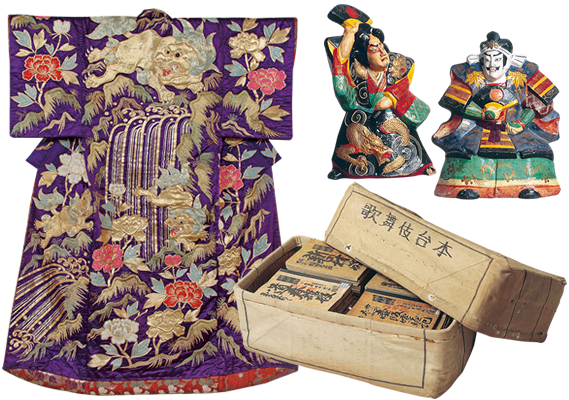
The theme is the handing down of Kabuki to successive generations.
Artefacts actually used in Kabuki are beautifully displayed. These include sumptuous, elaborately designed costumes, various stage props and the traditional musical instruments. Cultural items associated with Kabuki such as woodblock prints and clay figurines can also be viewed.
The Local Collection Exhibition
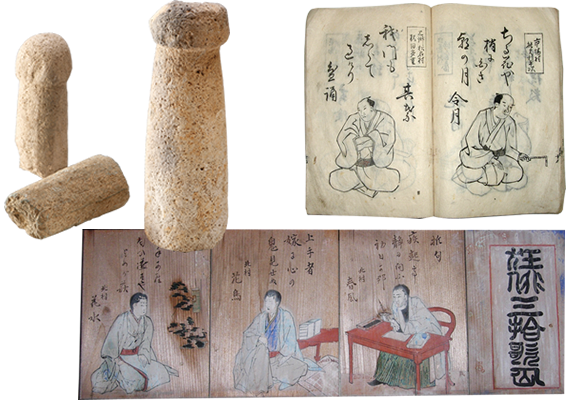
The theme is the Obara district.
This is an area endowed with nature and a landscape appealing to all emotions, personified by the enigmatic shikizakura (twice blooming) cherry blossom trees. The richly woven tapestry of Obara’s history dates back for over 18,000 years and various historical aspects of this are presented along with a local artefact collection.